If you own a home in Mecklenburg County, you have probably watched your assessed value climb and wondered what it does to your tax bill. The county's most recent revaluation reset values sharply, and plenty of homeowners opened their notices expecting the worst.
Here is what a rising assessed value actually means for what you pay, how your Charlotte property tax bill is calculated, the relief programs that can lower it, and what to expect from the next revaluation. The short version: a higher value does not automatically mean a proportionally higher bill.

What a Property Revaluation Actually Is
A revaluation is the county's process of updating the assessed value of every property to reflect current market value. Mecklenburg County has roughly 400,000 parcels, and state law requires every North Carolina county to reappraise at least once every eight years. Mecklenburg shortened its cycle to every four years in 2019 so values stay closer to the market and owners avoid one enormous jump after a long gap.
The most recent revaluation took effect in 2023 and reset values from a 2019 market to a 2023 market. The next one is scheduled for 2027. Between revaluations, your assessed value generally holds steady even as the market moves, which is why the reappraisal year brings the biggest changes.
One point that saves a lot of stress: a revaluation notice is not a tax bill. It tells you the county's new estimate of your home's value. What you actually pay depends on the tax rates the county, your city or town, and any special districts set later in the year.

How Much Values Jumped in the 2023 Revaluation
The 2023 revaluation was a large one. Countywide, assessed values rose about 51 percent on average. Residential property led the way at roughly 58 percent, while commercial values rose about 41 percent. The gap reflected years of strong housing demand across the Charlotte region.
Averages hide a lot of variation. Some neighborhoods saw far larger increases. An Axios analysis of the county's data found parts of west and southwest Charlotte, including Reid Park and Clanton Park, climbed 236 percent and 154 percent on average, and a stretch of Huntersville rose several hundred percent. Longtime owners in fast-changing neighborhoods often saw the steepest jumps.
So if your value roughly doubled, you were not alone. The important thing to understand is that a doubled value does not mean a doubled tax bill, which is where most homeowners get tripped up.

Does a Higher Value Mean a Higher Tax Bill?
Not directly. Your bill is your assessed value multiplied by the tax rate, so both numbers matter. After a revaluation raises values across the board, elected officials are required to publish a revenue-neutral rate, which is the rate that would bring in about the same total revenue as the year before. If they adopted that exact rate, the county would collect roughly the same amount overall even though values went up.
In practice, boards set the rate above or below revenue-neutral depending on their budget. So the real question each year is not only what your value did, but what rate the county and your municipality actually set. A large value increase paired with a lower rate can leave your bill close to flat. The same increase paired with a rate at or above the old level pushes it up.
This is also why two neighbors with similar value increases can see different changes in what they owe. Your bill depends on your specific value, your municipality's rate, and any fees, not on the headline average.

How Your Charlotte Property Tax Bill Is Calculated
The math is simple. Take your assessed value, divide by 100, and multiply by the tax rate. For the fiscal year that began July 1, 2025, the Mecklenburg County rate is 49.27 cents per $100 of value. On a $200,000 assessed value, the county portion is $985.40. On a $400,000 home, it is about $1,971.
That county rate is up 0.96 cents from the prior year's 48.31 cents. The county estimated the change adds about $36 a year, or roughly $3 a month, for the average homeowner. If you live inside Charlotte, the city adds its own rate on top, and the city also raised its rate in the 2025 budget, so a median-priced Charlotte home saw a combined city and county increase of a little under $100 for the year.
Your total bill also includes a municipal tax if you live in Charlotte or one of the six county towns, plus solid waste fees where they apply. If you pay through an escrow account, your lender spreads these costs across your monthly mortgage payment, so a rate change shows up as a shift in your escrow rather than one large bill.

What This Means for You as a Homeowner
The upside of a higher assessed value is equity. A home the county now values much higher usually reflects real gains you can tap when you sell, refinance, or borrow against it. For owners who plan to stay put, that higher value is mostly on paper until you use it.
The cost side lands in your monthly budget. If your escrow rises, your mortgage payment rises with it, so it is worth checking your escrow statement after each revaluation and rate cycle so the change does not catch you off guard. If you pay taxes directly, set reminders for the due dates to avoid penalties.
If you are thinking about selling, keep in mind that a higher assessed value is not the same as your market value or list price. Assessed values come from a mass-appraisal process and can lag or lead the actual market. A current comparative market analysis from an agent is a far better guide to what your home will really sell for.

What to Do If Your Value Looks Too High
If the county's estimate is higher than what you believe your home would sell for, you can appeal. The strongest window is the revaluation year, when the county opens its formal appeal period, but you can also request a review in other years if the property record has an error.
There are two paths. An informal review lets you and the assessor look at the value together and correct mistakes without a formal filing. A formal appeal goes to the Board of Equalization and Review, a panel of citizen volunteers that hears value disputes. Either way, come prepared with evidence: incorrect square footage or features on your record, recent sales of similar homes at lower prices, or condition issues that affect value.
Watch the deadlines closely. In a revaluation year you generally have a limited window from the date printed on your notice, so do not wait. The assessor's office also holds resource events where staff walk owners through the appeal process and the available relief options.

Property Tax Relief Options You Might Qualify For
North Carolina and Mecklenburg County run several programs that lower what qualifying owners pay. Seniors and disabled homeowners can often exclude a large share of their home's value, disabled veterans can exclude a set amount regardless of age or income, and the county's HOMES grant helps lower and moderate income owners with a direct credit toward the bill.
Most of the state exclusions have a June 1 application deadline through the county assessor, and most carry age, disability, or income requirements. The HOMES grant runs on its own schedule, generally opening July 1 and closing in late November, and it is first-come, first-served until the funds run out, so applying early matters.
| RELIEF PROGRAM | WHO IT HELPS AND THE BENEFIT |
|---|---|
| Elderly or Disabled Homestead Exclusion | Owners 65+ or totally and permanently disabled with 2025 income of $38,800 or less. Excludes the greater of $25,000 or 50% of the home's taxable value. Apply by June 1. |
| Circuit Breaker Tax Deferral | Qualifying elderly or disabled owners. Caps property taxes at a set share of income and defers the rest. Higher income limit than the homestead exclusion. Apply by June 1. |
| Disabled Veteran Homestead Exclusion | Veterans with a qualifying service-connected disability, or a surviving spouse. Excludes the first $45,000 of assessed value. No age or income limit. Apply by June 1. |
| HOMES Grant | Owner-occupants at or below 80% of area median income who have lived in the home three or more years. Credit of 35% of the county tax bill, up to $650. Apply July 1 to November 21. |
| Present-Use Value | Owners of qualifying farm, horticultural, or forest land. Taxes the land on its present use instead of full market value. |
These programs do not stack in every case. The HOMES grant cannot be combined with the state relief programs, so it is worth checking which one saves you the most. The county assessor's office and its tax-relief resource events can help you sort out eligibility and paperwork.

What Is Next: The 2027 Revaluation
The values set in 2023 stay in place until the next revaluation in 2027. Given how much the market has moved since then, another reset is coming, and getting ahead of it helps. Keep your property record accurate, watch for your notice when it lands, and review the revenue-neutral rate that officials publish so you can judge how your bill might change.
If you want to understand how your assessed value compares to what your home would actually sell for today, that is exactly the kind of question our team answers every day for Charlotte-area owners.
Don’t take our word for it
See what our clients say:
We’re Social! Lets Connect:
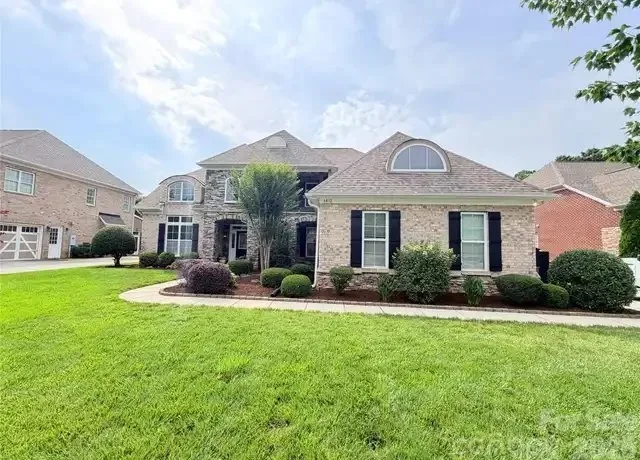
Find out how much your home's worth
Use our home value estimator to get a free, instant home-value estimate.
Enter your address
Is this the correct address?
Who should we send the report to?
We're pulling comps for your home right now. Let us know where to send your personalized analysis.
Where should we send your custom report?
We'll email a detailed CMA and comparable sales analysis.
You're all set, friend!
* This is a rough estimate of your home's value. We'll be in touch shortly to gather a few more details so we can provide a more in-depth and accurate equity evaluation in today's market.

Thinking About Moving
to Charlotte?
Make your move easier with our Free Charlotte Relocation Guide. Get insider details on neighborhoods, schools, commute times, cost of living, local hotspots, and more — all in one helpful guide.
Click below to access your free relocation guide and start exploring Charlotte like a local.
Download NowThe Bottom Line on Rising Property Values
A rising assessed value in Mecklenburg County is not automatically a crisis. It reflects real equity, and your actual bill depends on the rate officials set, not just the value. Know how your bill is calculated, appeal if the number is wrong, and apply for any relief program you qualify for.
If you want a clear read on your home's current market value, use the home value tool on this page for a quick estimate, then reach out to our team. We will compare your assessed value to real market data and help you decide what to do next, whether you are staying, appealing, or thinking about a move.
Let’s Connect Today!

Phone:
704-200-9833

Email:
info@thefinigangroup.com

Visit Us:
3440 Toringdon Way, ste 205
Charlotte NC 28277
