
Charlotte is one of the fastest growing cities in the country, and about 157 people move to the region every day. If you are thinking about joining them, you probably have the same questions everyone does before a move: what it costs, what you can buy, who is hiring, and where you should actually live.
This guide answers those questions for 2026. We cover the cost of living, the current housing market, the job market, the neighborhoods and suburbs people ask about most, schools, weather, things to do, and how to get around. By the end you will have a clear picture of what life here looks like and whether Charlotte is the right move for you.

Why People Are Moving to Charlotte
The Charlotte metro area reached roughly 2.9 million people as of mid 2025, up from about 2.6 million in 2020. That is around 278,700 new residents in five years, which ranked Charlotte seventh in the country for total growth over that span. In a single year, between July 2024 and July 2025, the metro added more than 54,000 people, the fifth largest numeric gain of any U.S. metro, behind only Houston, Dallas, Atlanta, and Phoenix.
The growth is broad. It is not just the city core filling in. Surrounding counties like Iredell, Lincoln, Union, and Lancaster in South Carolina are absorbing a large share of the newcomers, which is part of why housing, schools, and shopping keep expanding across the whole region. The city of Charlotte itself is now home to about 965,000 people, making it the 14th largest city in the country.
People come for a mix of reasons: a strong job market, a lower cost than the coastal metros many are leaving, and a climate that stays mild most of the year. The region pulls in a lot of people in their 20s and 30s, which keeps the median age around 35 and makes it one of the more popular parts of the country for young professionals and growing families.
How Much It Costs to Live in Charlotte
Charlotte's overall cost of living sits close to the national average, and several measures put it a few percent below. The category that gives buyers the most room is housing, which runs around 15 percent below the national median by most counts. Utilities tend to come in slightly under the national average, and groceries land right around it.
Taxes are a real part of the draw. North Carolina has a flat state income tax that dropped to 3.99 percent for 2026, down from 4.25 percent in 2025, with a further scheduled cut to 3.49 percent in 2027. The state does not tax Social Security retirement benefits, which matters for people closer to retirement. Property taxes are modest too. The combined Charlotte and Mecklenburg County rate works out to well under one percent of assessed value, a fraction of what comparable homes carry in many coastal markets.
On the monthly side, the average two bedroom rents for roughly $1,600 to $1,700, and a one bedroom generally falls between $1,300 and $1,500. The combined sales tax in Mecklenburg County has been about 7.25 percent, though county voters approved a one cent transportation sales tax increase in November 2025 that funds roads and rail. Median household income in the city runs in the high $70,000s to low $80,000s, which keeps the typical household within reach of the typical rent or mortgage.
The short version: your dollar goes further here than in most large metros people relocate from. A budget that barely covers a starter condo in a coastal city often buys a full single family home in a solid Charlotte neighborhood.
| CHARLOTTE AT A GLANCE | 2026 |
|---|---|
| Metro population | About 2.9 million |
| New residents per day | About 157 |
| Median home price (city) | Around $420,000 |
| Median 2-bedroom rent | $1,600 to $1,700 |
| State income tax | 3.99% flat |
| Combined sales tax | About 7.25% |
| Cost of living vs. U.S. | Near average; housing ~15% below |
| Major industries | Banking, fintech, energy, healthcare, manufacturing |
| Main airport | Charlotte Douglas (CLT), American's #2 hub |
| Pro sports | Panthers (NFL), Hornets (NBA), Charlotte FC (MLS) |

The Charlotte Housing Market in 2026
The Charlotte housing market in 2026 is balanced. It is not the frenzy of a few years ago, and it is not a crash. The median sale price in the city sits around $420,000, with Mecklenburg County closer to $440,000, according to Canopy MLS data. Prices are still drifting up, but at a slower and more predictable pace, in the low single digits year over year rather than the double digit jumps of the pandemic years.
Inventory has rebounded. Active listings across the metro were up roughly 15 to 19 percent compared with a year earlier, giving the area its healthiest supply in nearly a decade. Homes are taking longer to sell, averaging close to 68 to 72 days on market, which gives buyers time to inspect, compare, and negotiate instead of racing to win a bidding war. Sellers are still getting strong offers, often in the mid to high 90s as a percentage of list price, with mortgage rates hovering above 6 percent.
The more useful number is what your money buys. In Charlotte, a budget in the low $400,000s gets you a well built home in a good neighborhood with decent schools and a reasonable commute. That is the kind of value that keeps people moving here, and most analysts expect modest, steady appreciation in the 2 to 5 percent range going forward rather than a sharp swing in either direction.
Jobs and the Charlotte Economy
Charlotte is the second largest banking center in the United States. Bank of America is headquartered here, Truist is headquartered here, and Wells Fargo runs its East Coast operations out of the city. The metro is home to six Fortune 500 headquarters and fourteen Fortune 1000 headquarters, an unusually deep concentration for a city its size.
The economy reaches well beyond banking, though. Honeywell moved its headquarters to Charlotte, Lowe's is based just north in Mooresville, and Nucor, Albemarle, and Duke Energy all anchor major operations here. Atrium Health is one of the region's largest employers and the backbone of a growing medical sector. A fintech ecosystem has built up alongside the big banks, led by firms like nCino and LendingTree.
The momentum is still building. Japanese banking giant SMBC chose Charlotte for its second U.S. headquarters with plans to add about 2,000 jobs, and JPMorgan Chase and Citigroup have both expanded here. The region added 37,600 jobs in 2025, second in the country for total job growth, and CNBC named Charlotte the number one city on its 2025 Power City Index, ahead of Silicon Valley and Washington. UNC Charlotte feeds a steady pipeline of graduates into all of it.
Charlotte Neighborhoods and Suburbs
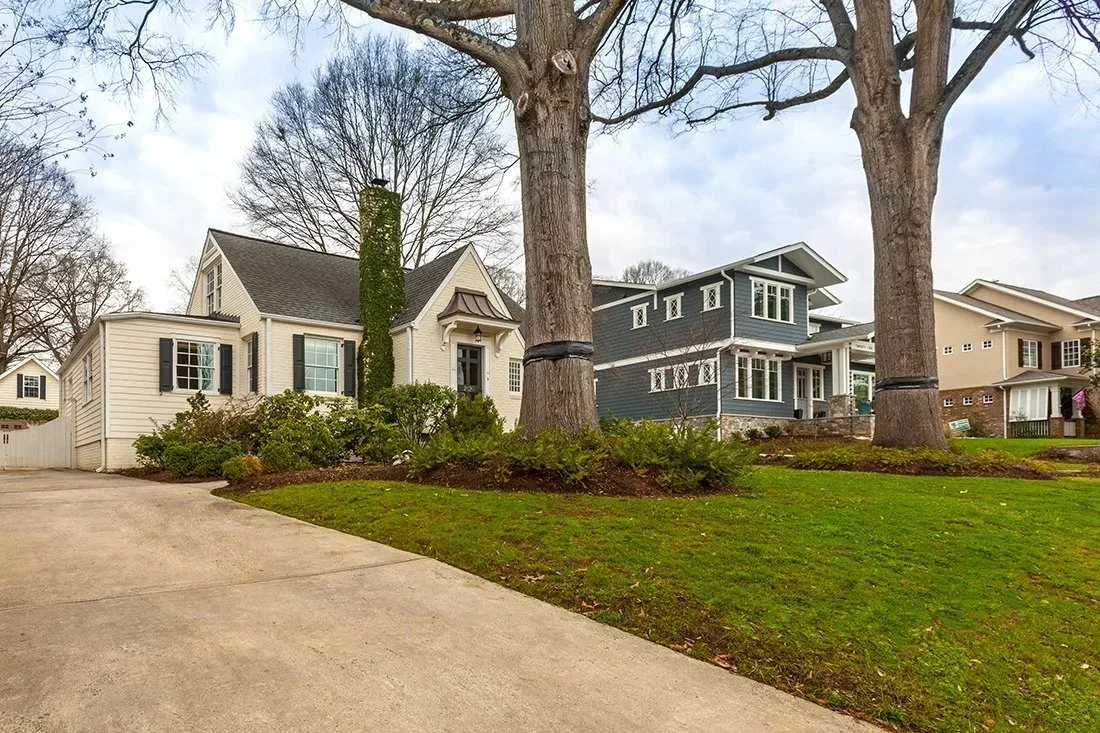
Charlotte is a city of distinct neighborhoods, and the right one depends on your stage of life, your commute, and your budget. Inside the city, Uptown is the walkable downtown core, full of high rise condos, restaurants, and the major sports venues. Just south, South End has become the go to for young professionals, with the Blue Line light rail running through it, plus breweries, patios, and new apartments. NoDa is the arts and music district, known for murals, live venues, and local breweries, and Plaza Midwood next door offers an eclectic mix of historic bungalows and some of the best dining in the city.
For established, tree lined character close to Uptown, look at Dilworth and Elizabeth, with their historic homes and short commutes. Myers Park and Eastover anchor the luxury end, with mature trees, larger lots, and some of the most sought after addresses in the region. Families who want newer construction and master planned amenities often head to Ballantyne and the rest of South Charlotte, which sits near major corporate campuses. University City, around UNC Charlotte, tends to be a more affordable entry point with strong rental demand.
Plenty of newcomers land in the suburbs and smaller towns. The Lake Norman communities of Huntersville, Cornelius, and Davidson draw people who want lake access and a town feel. Matthews and Mint Hill sit to the east, while Waxhaw and Weddington to the south offer more space and well regarded schools. Across the South Carolina line, Fort Mill and Rock Hill are popular for their schools and tax setup, and Concord and Kannapolis to the north keep adding new neighborhoods.
Schools and Education
Charlotte-Mecklenburg Schools, known as CMS, is one of the largest districts in the country and runs both neighborhood schools and a wide set of magnet programs, so it is worth researching specific schools and boundaries rather than the district as a whole. Many families moving for schools also look at the surrounding county systems in Union, Cabarrus, Iredell, and York County in South Carolina, which is one reason those suburbs keep growing.
On the private side, Charlotte Latin, Charlotte Country Day, and Providence Day are the best known independent schools, along with a range of religious and specialty options. For higher education, the area is anchored by UNC Charlotte, the state's largest business school, with Queens University in the city, Davidson College just north, and Central Piedmont Community College serving students across the region.
Don’t take our word for it
See what our clients say:
We’re Social! Lets Connect:
Table of Contents:
Weather and Climate
Charlotte has a humid subtropical climate, which in plain terms means four real seasons without harsh extremes. Summers are hot and humid, with highs often in the upper 80s to low 90s from June through August. Winters are mild, with highs that usually stay above freezing and only an occasional brush with light snow or ice that rarely sticks around.
Spring and fall are the standouts. Both are long, comfortable, and full of green, which is a big part of the appeal for people coming from colder climates. The trade off is a heavy pollen season in spring and the humidity that comes with Southern summers. For most newcomers, the mild winters more than make up for it.
Things to Do in Charlotte
There is a lot to fill a weekend here. The U.S. National Whitewater Center offers rafting, climbing, and miles of trails just outside the city. Camp North End and Optimist Hall have turned former industrial sites into popular food, drink, and event spaces, and the city's brewery scene runs deep, especially in NoDa and South End.
Sports fans are well covered, with the Carolina Panthers in the NFL, the Charlotte Hornets in the NBA, and Charlotte FC in Major League Soccer, plus the NASCAR Hall of Fame downtown and Charlotte Motor Speedway nearby. When you want to get out of town, Lake Norman and Lake Wylie are close for boating and lake days, the Blue Ridge Mountains and Asheville are about two hours west, and the Atlantic beaches are roughly three to three and a half hours east. That central position is one of the quiet perks of living here.

Find out how much your home's worth
Use our home value estimator to get a free, instant home-value estimate.
Enter your address
Is this the correct address?
Who should we send the report to?
We're pulling comps for your home right now. Let us know where to send your personalized analysis.
Where should we send your custom report?
We'll email a detailed CMA and comparable sales analysis.
You're all set, friend!
* This is a rough estimate of your home's value. We'll be in touch shortly to gather a few more details so we can provide a more in-depth and accurate equity evaluation in today's market.
Getting Around Charlotte
Charlotte Douglas International Airport, known as CLT, is one of the biggest reasons the city works so well for people who travel. It is American Airlines' second largest hub, consistently ranks among the ten busiest airports in the country, and offers nonstop service to more than 180 destinations. For a city this size, that level of connectivity is hard to match.
Day to day, Charlotte is mostly a driving city. The interstates I-77, I-85, and the I-485 outer loop tie the region together, though traffic has grown along with the population. The LYNX Blue Line light rail runs about 19 miles from UNC Charlotte through NoDa, Uptown, and South End down to Pineville, and the CityLynx Gold Line streetcar adds a short route through the center city. Transit is expanding, too. In November 2025 county voters approved a one cent sales tax to fund roads and rail, including a planned Silver Line that would eventually connect the airport to Uptown and the eastern suburbs.
Making Your Move to Charlotte
Charlotte offers a rare combination for a city its size: a strong and diversifying job market, a cost of living that stays close to the national average, mild weather, and neighborhoods that range from walkable and urban to quiet and suburban. The market in 2026 is balanced enough that buyers have real choices and time to make a good decision.
The best first step is to narrow your search by what matters most to you, whether that is commute, schools, budget, or lifestyle, and then get pre approved so you know your range before you start touring. If you are selling a home elsewhere first, our home value tool can give you a fast estimate of what your current place is worth so you can plan the move with real numbers. When you are ready, reach out and we will help you find the right neighborhood and the right home for your next chapter in Charlotte.
Let’s Connect Today!

Phone:
704-200-9833

Email:
info@thefinigangroup.com

Visit Us:
3440 Toringdon Way, ste 205
Charlotte NC 28277
