The sale price is the number everyone talks about. The number that actually matters is the one the closing attorney wires to your bank account a day or two after you sign, and for most Charlotte sellers that figure is a lot smaller than the price on the contract.
This post walks through a real worked example instead of a calculator. We take a $500,000 Charlotte home with a typical mortgage, deduct every cost in the order it shows up on a North Carolina closing statement, and land on the exact dollar amount the seller walks away with. Every assumption is spelled out so you can swap in your own numbers.
The Short Answer
In the example below, a Charlotte seller who closes at $500,000 with a $311,000 mortgage balance walks away with about $154,600. Selling costs come to roughly $33,600, or 6.7 percent of the sale price, and the mortgage payoff takes the rest.
The rough rule of thumb for Charlotte is that your costs at closing will run somewhere between 6 and 8 percent of the sale price, depending mostly on what you agree to pay toward the buyer's agent and what you give up in repair and closing cost negotiations. Subtract that from the price, then subtract your mortgage payoff, and you have your number.
That rule of thumb is a starting point, not an answer. The rest of this guide shows where each dollar goes, which costs are fixed, which are negotiable, and what comes back to you after closing that never shows up on the statement at all.
The Example Home
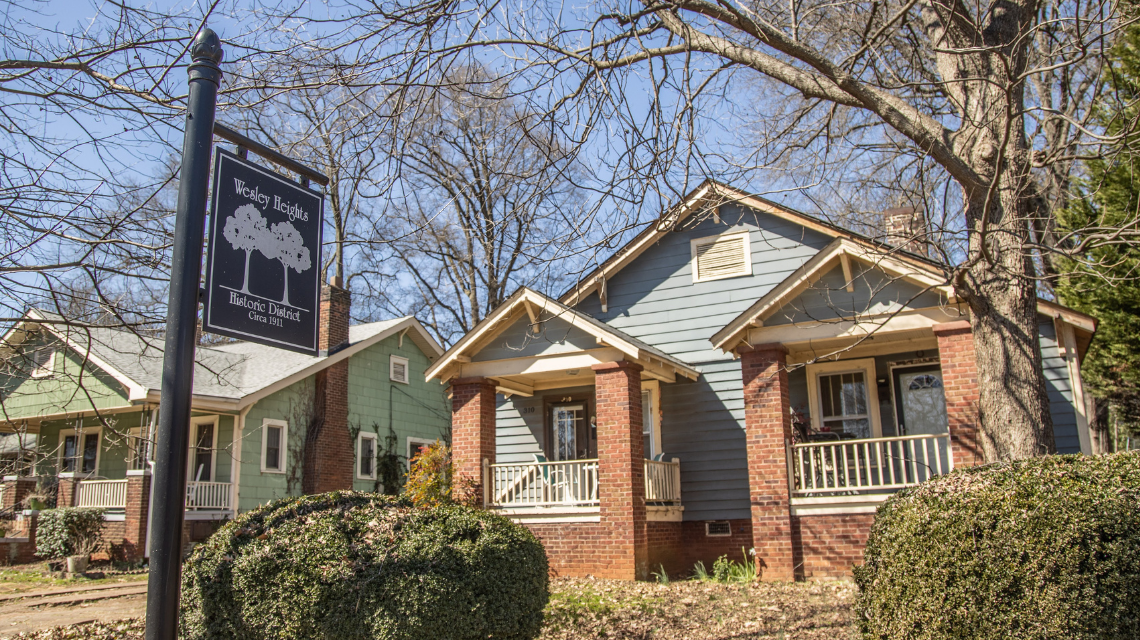
To keep the math honest, here is the home we are using. It is a four bedroom house in a Charlotte suburb with a small homeowners association, bought in 2019, and it sells for $500,000 with a closing date of October 15, 2026. The sellers accepted the first offer that came in at full price after a week on the market.
Here are the assumptions behind every line that follows:
Contract sale price: $500,000
Listing agent compensation: 2.5 percent of the sale price
Buyer's agent compensation the seller agreed to pay: 2.5 percent of the sale price
Mortgage: $311,000 principal balance at 6.5 percent after the October 1 payment
Annual property tax bill: $4,400, not yet paid for 2026
HOA dues: $300 per quarter, paid current
Repair credit negotiated after the buyer's inspection: $3,000
No seller paid closing cost credit to the buyer
The sellers lived in the home the entire time they owned it
Change any of those and the final number changes. We show how much each one moves it further down. The point is to see the shape of the math, not to match your house exactly.

Step 1: Agent Compensation
Compensation is the biggest single cost of selling, and it has changed since the 2024 National Association of Realtors settlement. There is no standard rate, there never legally was, and the buyer's agent fee is no longer advertised through the MLS. What you pay your listing agent is set in your listing agreement. Whether you pay anything toward the buyer's agent is a separate decision, and in Charlotte it usually comes up as a request inside the buyer's offer.
In our example the seller agreed to 2.5 percent for the listing side and accepted an offer that asked for 2.5 percent toward the buyer's agent. On $500,000 that is $12,500 for each side, $25,000 total. Both come out of the sale proceeds at closing, so the seller never writes a check.
Why agree to pay the buyer's agent at all? Because most Charlotte buyers are financing with a mortgage and have limited cash after the down payment, and a buyer who has to pay their own agent out of pocket often cannot afford your home, or offers less to make up the difference. Treating it as a negotiating item rather than a given is the right mindset. Treating it as something you will never pay usually costs more than it saves.
Running total after Step 1: $500,000 less $25,000 leaves $475,000.

Step 2: North Carolina Seller Closing Costs
North Carolina is an attorney closing state, and the good news for sellers is that the seller side of the closing is cheap. Buyers pay for their lender fees, their title search, and their title insurance. Sellers pay for a short list of items that together usually land under $2,000.
The first is the North Carolina excise tax, which is the state's transfer tax on real estate. It is $1 for every $500 of the sale price, which works out to 0.2 percent. On $500,000 that is $1,000, and it is paid by the seller. Mecklenburg, Union, Cabarrus, Gaston, Iredell, and the other counties around Charlotte do not add a county transfer tax on top of it, so this is the only transfer tax on the statement.
The second is the attorney. The seller typically pays for the preparation of the deed and the lien waiver, plus a seller side settlement fee if the seller uses their own attorney rather than the buyer's closing attorney. In our example that comes to $650. Third is a small group of mechanical charges: recording the cancellation of your paid off deed of trust, courier or overnight fees for the payoff, and the outgoing wire of your proceeds. Call it $100.
Running total after Step 2: $475,000 less $1,750 leaves $473,250.

Step 3: Property Tax and HOA Prorations
Prorations trip up more sellers than anything else on the statement, because they are not a fee. They are a settling up of costs that run on a calendar, split between you and the buyer on the day you close.
Property taxes in Mecklenburg County and the surrounding counties are billed for the calendar year. Whoever owns the home on a given day is responsible for that day's share. Our example closes October 15, so the seller owns the home for 288 of the 365 days in 2026 and owes 288 days of the $4,400 bill, which is $3,472. The 2026 bill had not been paid yet, so the closing attorney pays the full bill out of the closing and the buyer is charged for the remaining 77 days. If the seller had already paid the bill in September, the buyer would instead reimburse the seller for those 77 days. Either way, the seller's real cost is the same $3,472.
HOA dues work the same way, but the dollars are smaller and sometimes run in the seller's favor. Our seller paid the fourth quarter dues on October 1, so the buyer owes them back for the half quarter they will not use, about $250. Against that, the HOA charges for a statement of account and a transfer or capital contribution fee, which in this example come to $600. Net, the HOA lines cost the seller $350.
Running total after Step 3: $473,250 less $3,822 leaves $469,428.

Step 4: Repairs and Concessions
Nothing in this step is required. All of it is negotiated, and all of it comes out of your proceeds. In North Carolina the buyer pays a due diligence fee to lock in a period of time to inspect the home and walk away for any reason. During that window they will almost always come back with a repair request, and how that conversation goes is usually worth more than the commission conversation.
Our buyer's inspector flagged an aging water heater and some rotted trim. Rather than hire contractors and manage the work, the seller offered a $3,000 credit at closing and the buyer accepted. That credit shows up as a reduction to the seller's proceeds. It is the same as dropping the price by $3,000, except the lender still appraises against the full $500,000.
Two other common items did not apply here but often do. The first is a seller paid closing cost credit, where the buyer asks for $5,000 or $10,000 toward their own closing costs in exchange for paying a higher price. The second is a home warranty for the buyer, usually $500 to $700. Both are legitimate tools, and both are money off your bottom line.
Running total after Step 4: $469,428 less $3,000 leaves $466,428. That is the seller's net before the mortgage.

Step 5: The Mortgage Payoff
The payoff is the single largest deduction for most Charlotte sellers, and it is almost never the balance you see on your monthly statement. The closing attorney orders a formal payoff letter from your lender, good through a specific date, and that letter adds interest you have not paid yet.
Mortgage interest is paid in arrears. The payment you made on October 1 covered September's interest. When you close on October 15, you owe interest for October 1 through October 15 on top of the principal. On a $311,000 balance at 6.5 percent, that is about $55 per day, so 15 days adds roughly $830. The payoff letter in our example reads $311,830. If closing slips a week, the payoff grows by about $390, and if it slips past the first of the month, you make another regular payment and the letter gets reissued.
If you have a home equity line or a second mortgage, it gets paid off here too. Lines of credit also have to be formally closed, not just paid to zero, or the lender will not release the lien. Ask your attorney to confirm that in writing before closing day.
Final math: $466,428 less the $311,830 payoff leaves $154,598. That is the wire.

The Full Worked Example
Here is every line in one place, in the order it appears on a North Carolina seller's settlement statement.
| LINE ITEM | AMOUNT |
|---|---|
| Contract sale price | $500,000 |
| Listing agent compensation (2.5%) | ($12,500) |
| Buyer's agent compensation agreed by seller (2.5%) | ($12,500) |
| NC excise tax ($1 per $500) | ($1,000) |
| Seller attorney fee and deed preparation | ($650) |
| Lien release recording, courier, and wire fees | ($100) |
| Property tax proration, Jan 1 to Oct 15 (288 days of $4,400) | ($3,472) |
| HOA statement and transfer fees, net of dues refund | ($350) |
| Repair credit to buyer after inspection | ($3,000) |
| Total selling costs | ($33,572) |
| Net before mortgage | $466,428 |
| Mortgage payoff ($311,000 principal plus 15 days interest) | ($311,830) |
| Net proceeds wired to seller | $154,598 |
Selling costs total $33,572, which is 6.7 percent of the sale price. Of that, $25,000 is agent compensation, $2,100 is excise tax, attorney, recording, and HOA fees, $3,472 is the property tax proration, and $3,000 is the repair credit. The mortgage payoff is not a selling cost, it is your own debt, but it is two thirds of the gap between the sale price and the wire.

What the Closing Statement Does Not Show
The settlement statement captures what happens at the closing table. It does not capture the money you spent before listing or the money that comes back to you afterward, and both matter if the question is how much cash you actually end up with.
On the spending side, most sellers put money into the house before it goes live. For our example home that was fresh paint in the main living areas, a deep clean, mulch and pressure washing out front, and professional photos and video, about $3,500 out of pocket. Moving a four bedroom home across town ran another $2,000. Neither appears on the statement, but both came out of the sellers' checking account. Count them and the $154,598 wire becomes about $149,100 in hand.
On the money back side, three things return to you after closing. First, your lender refunds whatever is sitting in your escrow account for taxes and insurance, usually within a few weeks of the payoff. In our example that was $2,100. Second, once you cancel your homeowners insurance policy, the insurer refunds the unused portion of the premium. Third, if you prepaid anything else that transferred to the buyer, such as a termite bond or a propane tank, the attorney credits you for it at closing.
One more item that confuses sellers: the buyer's due diligence fee and earnest money. The due diligence fee is paid directly to you when the contract is signed and is yours to keep whether or not the sale closes. At closing, both the due diligence fee and the earnest money are credited to the buyer as part of the purchase price. They are not extra money on top of the $500,000. They are part of it, delivered early.

Will You Owe Taxes on the Gain?
For most Charlotte sellers who lived in the home, the answer is no. Federal law lets you exclude up to $250,000 of profit from the sale of your primary residence if you file as a single person, or $500,000 if you are married filing jointly, as long as you owned the home and lived in it as your main home for at least two of the five years before the sale.
Profit for this purpose is not the same as proceeds. It is what you sold for, minus what you paid, minus the cost of improvements you made, minus your selling costs. Our example sellers bought in 2019 for $335,000, put $20,000 into a new roof and HVAC, and spent $33,572 to sell. Their gain is roughly $111,000, well under the exclusion, so they owe nothing on it and do not need to report the sale in most cases.
The math changes if the home was a rental, if you claimed depreciation, if you sold another primary residence within the last two years, or if your gain is above the exclusion. North Carolina taxes any gain that is taxable federally as ordinary income, so it is worth a call to a CPA before you sell if any of those apply.

Three Things That Move the Number Most
With the example in hand, it is easy to see which decisions matter and by how much. Here is what happens to the $154,598 when you change one assumption at a time.
Sale price is first, and it is not close. If the home had sold for $490,000 instead of $500,000, a 2 percent miss, the seller would have saved $520 in compensation and excise tax and lost $10,000 in price. Net proceeds fall to about $145,100. Every dollar of price is a dollar of proceeds, less about 5 cents. That is why pricing, presentation, and marketing are worth more attention than any fee on the statement. Our listings have averaged a 99.27 percent list to sale ratio across more than 800 homes, against a market average closer to 97 percent, and on a $500,000 home that gap alone is worth more than the entire attorney and tax line.
Buyer's agent compensation is second. Had the seller negotiated that request down from 2.5 percent to 2 percent, proceeds rise by $2,500 to about $157,100. Had they refused to pay it at all, proceeds would be $12,500 higher on paper, but the pool of buyers who could afford the home would have been smaller, and the price almost certainly lower. The right answer depends on your home and your market, which is a conversation to have with your agent before you list.
Concessions are third. A $5,000 seller paid closing cost credit drops proceeds to about $149,600. A buyer who asks for one is often asking for a different reason than a buyer who asks for a price cut. They may need cash to close rather than a lower payment, and sometimes a credit paired with a higher price nets you more than a clean lower offer. Run both versions before you decide.
Selling on the South Carolina Side
A good share of our sellers are in Fort Mill, Tega Cay, Rock Hill, Indian Land, and Lake Wylie, and the math across the state line is nearly the same with two differences.
The transfer tax is higher. South Carolina charges a deed recording fee of $1.85 for every $500 of the sale price, or 0.37 percent, compared with 0.2 percent in North Carolina. On the same $500,000 sale the seller pays $1,850 instead of $1,000. South Carolina is also an attorney closing state, so the attorney and deed preparation costs look similar.
The other difference is in how the contract handles inspections. South Carolina does not use North Carolina's due diligence fee structure, so repair negotiations run on the inspection contingency in the contract instead. The dollars tend to land in the same range, but the negotiating position is different, and a seller used to one side of the line should not assume the other works the same way.

Frequently Asked Questions
How much does it cost to sell a house in Charlotte, NC?
Plan on 6 to 8 percent of the sale price in total selling costs. Agent compensation is the largest piece, typically 4 to 6 percent combined if you agree to pay the buyer's agent, and the rest is the North Carolina excise tax at 0.2 percent, attorney and recording fees under $1,000, prorated property taxes and HOA dues, and whatever you negotiate in repairs or credits. On a $500,000 home in our worked example, the total was $33,572, or 6.7 percent.
Who pays closing costs in North Carolina, the buyer or the seller?
Both, but the buyer pays more. Buyers cover their lender fees, title search, title insurance, survey, and the bulk of the attorney's settlement fee. Sellers cover the excise tax, deed preparation, their share of prorated taxes and dues, agent compensation, and any credits they agreed to in the contract.
How do I calculate my net proceeds from a home sale?
Start with the sale price. Subtract agent compensation, the excise tax at $1 per $500, attorney and recording fees, your prorated share of the year's property taxes and HOA dues, and any repair credits or closing cost credits in the contract. Then subtract your mortgage payoff, which is your principal balance plus interest from your last payment through the closing date. What is left is your net. Your listing agent should give you a written seller net sheet with these numbers before you list and again with every offer.
Is the due diligence fee extra money for the seller?
No. In North Carolina the due diligence fee is paid to the seller at contract and is non refundable, but at closing it is credited to the buyer as part of the purchase price. If the buyer walks away during due diligence, you keep it. If the sale closes, it was simply part of the price, paid early.
When do I get my money after closing in North Carolina?
Usually the same day or the next business day. In North Carolina a sale is not final until the deed is recorded at the county register of deeds, and the attorney cannot disburse funds until then. Once recorded, the attorney wires your proceeds. Closings late in the afternoon sometimes record the next morning.
Do I pay capital gains tax when I sell my house in NC?
Most owner occupants do not. If you lived in the home for at least two of the last five years, you can exclude up to $250,000 of gain if single or $500,000 if married filing jointly. Gain above that, or gain on a rental or second home, is taxable federally and by North Carolina. Talk to a CPA if you are near the limit or the home was not your primary residence.
Don’t take our word for it
See what our clients say:
We’re Social! Lets Connect:
Table of Contents:
What is Your Home REALLY Worth?
Use our home value estimator to get a free, instant home-value estimate.
Enter your address
Is this the correct address?
Who should we send the report to?
We're pulling comps for your home right now. Let us know where to send your personalized analysis.
Where should we send your custom report?
We'll email a detailed CMA and comparable sales analysis.
You're all set, friend!
* This is a rough estimate of your home's value. We'll be in touch shortly to gather a few more details so we can provide a more in-depth and accurate equity evaluation in today's market.

Thinking About Moving
to Charlotte?
Make your move easier with our Free Charlotte Relocation Guide. Get insider details on neighborhoods, schools, commute times, cost of living, local hotspots, and more — all in one helpful guide.
Click below to access your free relocation guide and start exploring Charlotte like a local.
Download NowGet Your Own Number
Every seller net sheet starts with one input: what the home will sell for. Our free home value tool gives you an instant estimate in seconds. From there, we will pull a payoff estimate from your lender, confirm your tax and HOA figures, and hand you a written net sheet that shows the wire before you commit to anything.
If the number works, we will talk about how to grow it. Our 200 Step Marketing Plan is built to win on the line that matters most, the sale price, and it is why our listings close at 99.27 percent of list and average about 17 days on market. If the number does not work yet, we will tell you that too, and what would have to change.
Call or text (704) 200-9833 or reach out through the form below. No pressure and no obligation.
For the steps between deciding to sell and closing day, read our Charlotte home selling tips guide. For timing, see how long it takes to sell a house in Charlotte.
The worked example above is illustrative and uses rounded assumptions. Agent compensation is negotiable and set by individual agreement. Closing costs, prorations, and payoff figures vary by lender, county, closing date, and contract terms. Nothing here is legal or tax advice. Confirm your figures with your closing attorney and a CPA.
