Should I Sell My House Before I Buy the Next One? (Charlotte, NC 2026)
It is the question we hear more than any other from Charlotte homeowners who are ready to move up, downsize, or change neighborhoods. Do you sell the house you are in first, or do you go buy the next one and sort out the old house afterward?
Both paths work. They carry different risks, and the right one depends on your equity, your cash reserves, and how quickly your specific home is likely to sell. Here is how the decision plays out in the Charlotte market right now, what each path actually costs, and one detail in the North Carolina contract that catches move-up buyers off guard.
Should You Sell First or Buy First?
For most Charlotte homeowners, selling first is the safer path. If you need the equity from your current home to make the down payment on the next one, or if carrying two mortgage payments would strain your budget, sell first. You will know your exact number, you will shop with cash in hand, and your offer will compete against contingent offers instead of being one.
Buying first makes sense in a narrower set of circumstances. You have enough cash or an established line of credit to cover the down payment without touching your current equity. You can qualify for both mortgages at the same time. And you are shopping in a segment where the right house comes along rarely enough that missing it would cost you months of waiting.
The tradeoff is certainty against convenience. Selling first buys certainty and costs you a second move or a short stretch in temporary housing. Buying first buys convenience and costs you money and risk while two homes sit in your name. Everything else is detail.

How Long Does It Take to Sell a House in Charlotte Right Now?
The number most people plan around is the wrong one. Days on market measures the stretch from the day a home is listed to the day the seller accepts an offer. It does not include the due diligence period, the loan process, or the closing itself. According to Canopy MLS, homes across the Charlotte region averaged 55 days on market in July 2026, up from 46 days a year earlier.
The figure to actually build your plan around is list to close, which measures the full stretch from listing date to closing date. That number reached 100 days in July, up from 91 days the year before. If you are timing a purchase against the sale of your current home, you are budgeting for roughly three and a half months, not two.
Closer in, the pace is quicker. Homes in Mecklenburg County averaged 40 days on market in July, and sellers there received 96.5 percent of their original list price. The City of Charlotte matched that 40 day pace. The regional average gets pulled up by the outlying counties, so where your home sits matters as much as what it is.
Pricing and preparation move that number more than anything else. Our team averages 17 days on market and a 99.27 percent list to sale ratio across more than 800 homes sold since 2016. That gap is the difference between a home priced and marketed correctly from day one and one that sits while the market decides it is overpriced. We broke the full timeline down in our guide to how long it takes to sell a house in Charlotte.
What Happens If You Sell First?
You close on your current home, the proceeds land in your account, and you go shopping with a known budget and no strings attached. In a market where inventory is growing, that matters. Charlotte region inventory rose 6.9 percent year over year to 13,600 homes for sale in July, and months of supply reached 3.7. Sellers face more competition than they did a year ago, and a clean offer with no sale contingency stands out.
You also stop guessing. Every move-up buyer builds a plan around what they think their house is worth. Selling first replaces the estimate with a closing statement. If the home appraised low, or the inspection cost you a repair credit, you find out before you commit to a new mortgage instead of after.
The obvious problem is where you live in between. There are three common answers. You negotiate a post-closing occupancy agreement, sometimes called a rent-back, and stay in the home for a set number of days after closing while you finish the purchase. You rent short term. Or you stay with family and put the furniture in storage for a few weeks.
The rent-back is the cleanest of the three, and buyers agree to it more often than people expect, particularly when the buyer is an investor or is not in a rush to move. The cost is usually a daily rate close to the buyer's carrying cost on the home. Ask for it during the offer negotiation, when you still have room to trade for it, not after you are already under contract.
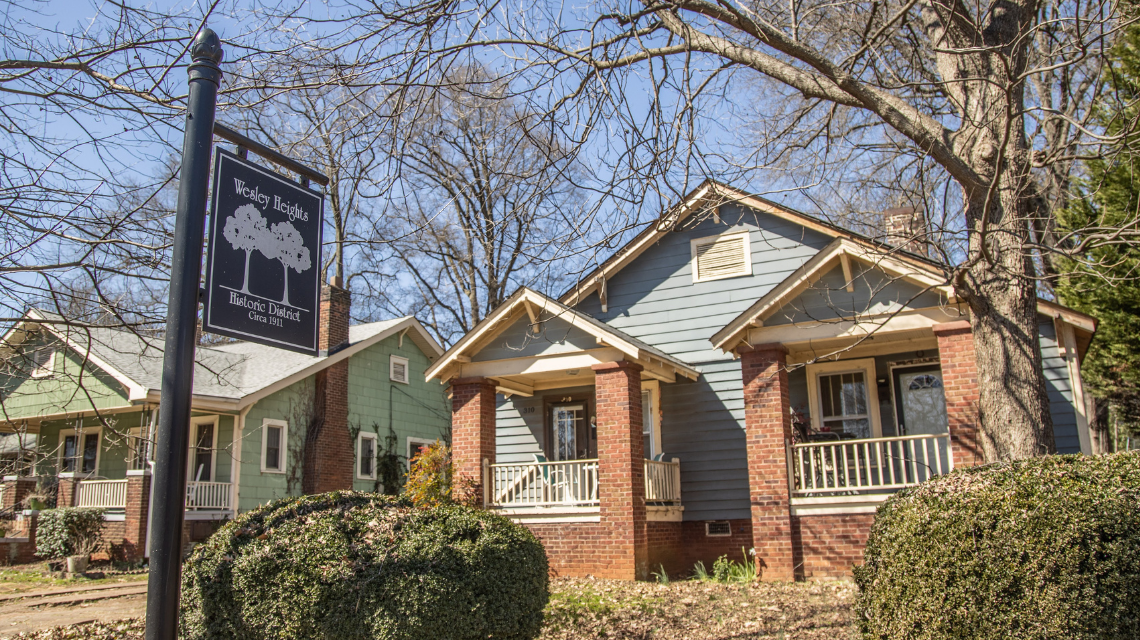
What Happens If You Buy First?
You find the house, you buy it, you move once, and you sell the old home empty and staged on your own schedule. No temporary housing, no storage unit, no second move. For a family with kids in school, or anyone who has already moved twice in a year, that convenience is worth real money.
It is also expensive. The 30 year fixed rate averaged 6.76 percent in Freddie Mac's survey for the week ending September 10, 2026. A $400,000 loan at that rate runs roughly $2,600 a month in principal and interest before taxes, insurance, and HOA dues. Carry that across the region's 100 day list to close window and you are looking at close to $8,600 in payments on a house you no longer live in, plus utilities, lawn care, and insurance on a vacant property.
The larger cost is usually not the payment. It is the pressure. A seller carrying two mortgages negotiates differently than one who is not, and buyers can read it. Price reductions come faster, concessions get bigger, and the home that would have sold at 97 percent of list sells at 94. On a $500,000 home that spread is $15,000, which dwarfs the carrying cost you were worried about in the first place.
Then there is the qualifying question. Your lender has to count both mortgage payments against your income unless your current home is already under contract or rented with a signed lease in place. Plenty of buyers who feel financially comfortable find out their debt to income ratio disagrees. That conversation belongs at the very start of the process, not after you have found the house you want.

Why Buying First Carries Extra Risk in North Carolina
This is the part that surprises people who have bought homes in other states. The standard North Carolina Offer to Purchase and Contract, Form 2-T, does not protect you if your current home fails to sell. The contract states plainly that it is not conditioned on the sale, lease, or closing of other property you own unless an addendum says otherwise.
There is a spot in the contract where you note that you have a home to sell, and it is easy to assume that spot does something for you. NC REALTORS has addressed this directly. That representation is information for the seller so they can judge the strength of your offer. It does not create a contingency, and it does not give you a way out if your house does not sell.
Form 2-T also contains no loan contingency and no appraisal contingency. Your protection is the due diligence period, and you pay for it. The due diligence fee is a negotiated amount paid to the seller when the contract is formed. It becomes the seller's property on the effective date, it is credited back to you at closing, and it is non-refundable outside a short list of exceptions such as a material breach by the seller.
Put those pieces together and the risk gets concrete. If you buy first, your house does not sell, and you have to walk away from the purchase, you lose the due diligence fee and you may lose your earnest money on top of it. On a purchase in the mid six figures, a due diligence fee running into the thousands is not unusual.
There are two ways to handle it. The first is the Contingent Sale Addendum, Form 2A2-T, which makes the purchase conditional on the sale of your home. It gives the seller the right to keep marketing the property and to terminate under defined circumstances, and it provides for a refund of the due diligence fee if the seller terminates during the due diligence period under that addendum. The second is to negotiate a longer due diligence period and a settlement date far enough out that your sale has time to close. With 3.7 months of supply and homes sitting longer, sellers are more open to both than they were three years ago.
A contingent offer is still a weaker offer. Expect to pay closer to full price for the privilege, and expect to lose to a clean offer if there is competition. We are not attorneys, and contract language changes, so have your agent and a North Carolina real estate attorney review the exact terms before you sign anything.

How Do You Buy Before You Sell?
If buying first is the right call for your situation, there are several ways to cover the gap. Each one has a cost, and the right choice depends on how much equity you have and how long you expect to carry both homes.
A home equity line of credit. Set it up before you list. Most lenders will not fund a HELOC on a home that is already on the market, and approval takes time. HELOC rates averaged 7.26 percent nationally as of September 9, 2026, according to Bankrate.
A bridge loan. Short term financing secured against your current home, built for exactly this situation. Rates and fees run higher than a HELOC, but the structure assumes a quick payoff when your home sells.
A contingent offer using Form 2A2-T. The cheapest option in dollars and the most expensive in negotiating position.
An extended settlement date. Negotiate 60 or 75 days instead of 30 and list your home immediately. This works well when the seller of your new home is not in a hurry.
A cash offer on your current home. Our Instant Offer option gives you a firm closing date up front, which turns a timing problem into a scheduling problem. You trade some price for certainty.
Asset based lending. If your down payment is sitting in investments, some lenders will let you borrow against the account rather than selling and triggering a tax bill.
One more option rarely comes up in these conversations. If you want to line up the next house quietly before your own home hits the market, private and off-market listings let you shop without a public clock running on either side.
Sell First or Buy First: A Quick Guide
Most of this decision comes down to a handful of facts about your own situation. Find yourself in the left column.
| IF THIS SOUNDS LIKE YOU | THE PATH THAT USUALLY FITS |
|---|---|
| You need your current equity for the down payment | Sell first |
| Two mortgage payments would strain the budget | Sell first |
| You own a condo or townhome | Sell first, longer runway |
| You are relocating out of the Charlotte area | Sell first |
| You have cash reserves or a HELOC already open | Buy first |
| You qualify for both payments without the sale | Buy first |
| You are moving up into thin inventory | Buy first, with a contingency plan |
| You are tied to a school year or job start date | Buy first, or sell with a rent-back |
| You would rather move once than twice | Either, with a rent-back negotiated |

How Should You Decide?
Work through it in this order and the answer usually becomes obvious before you reach the end.
Start with the lender, before you tour a single house. Ask one question: can I qualify for both payments if my current home has not sold yet? The answer is yes or no, and it settles half the debate on the spot.
Second, get an accurate value on your current home. Not an automated estimate, an actual walkthrough. Your entire plan rests on the equity number, and automated valuations miss the things that move a Charlotte home's price the most, including updates, lot position, condition, and school assignment.
Third, be honest about your property type, because supply is not spread evenly. In July, single family homes across the region carried 3.5 months of supply, townhomes 4.4 months, and condos 6.1 months. Condo prices fell 5.2 percent year over year to a median of $292,000 while single family prices rose 2.4 percent to $420,000. If you own a condo or a townhome, plan on a longer runway and lean toward selling first.
Fourth, factor in what you are buying. The median sales price in July was $410,000 across the Charlotte region, $468,500 in Mecklenburg County, and $430,000 in the City of Charlotte. If you are moving up into a segment where good inventory is thin, the case for buying first gets stronger. If you are moving into a segment with plenty of choice, selling first costs you very little.
What Is Your Next Step?
Start with your number. Use the home value tool on this page for a current estimate, then let us walk the house and give you a real one. That single figure decides most of this for you.
From there we map the timeline backward from the date you want to be in the new house, line up the lender conversation, and build a plan around your situation instead of a general rule. Our 200-Step Marketing Plan, 29-Day Sale Guarantee, and Instant Offer option all exist to make the timing predictable, which is the whole problem you are trying to solve.
The Finigan Group has sold more than 800 homes and over $280 million in volume since Josh and Katie Finigan founded the team in 2016, with more than 500 five-star reviews and a RealTrends Verified ranking as the number one team in Charlotte and number 13 in North Carolina for 2026. Josh stays personally involved through closing, so the person who builds your plan is the person who finishes it.
Call or text (704) 200-9833 when you are ready to talk through timing. For more on preparing the sale side of the move, start with our Charlotte home selling tips guide and our walkthrough on how to choose the best listing agent in Charlotte.
Don’t take our word for it
See what our clients say:
We’re Social! Lets Connect:
Table of Contents:
What is Your Home REALLY Worth?
Use our home value estimator to get a free, instant home-value estimate.
Enter your address
Is this the correct address?
Who should we send the report to?
We're pulling comps for your home right now. Let us know where to send your personalized analysis.
Where should we send your custom report?
We'll email a detailed CMA and comparable sales analysis.
You're all set, friend!
* This is a rough estimate of your home's value. We'll be in touch shortly to gather a few more details so we can provide a more in-depth and accurate equity evaluation in today's market.

Thinking About Moving
to Charlotte?
Make your move easier with our Free Charlotte Relocation Guide. Get insider details on neighborhoods, schools, commute times, cost of living, local hotspots, and more — all in one helpful guide.
Click below to access your free relocation guide and start exploring Charlotte like a local.
Download Now