What Is My House Worth in Charlotte, NC? How to Tell If Your Estimate Is Wrong (2026)
The fastest way to find out what your house is worth in Charlotte is to type your address into an online estimator. The fastest answer is not the same as the right answer. Zillow and Redfin both publish their own error rates, and for homes that are not currently listed, those rates are wide enough to move a Charlotte sale by tens of thousands of dollars.
This guide covers what homes are actually selling for across the Charlotte region right now, how accurate the automated estimates really are, the specific reasons they miss on Charlotte properties, seven signs the number on your screen is wrong for your house, and what to do instead.

What Is the Average Home Worth in Charlotte Right Now?
The most recent Canopy MLS data, covering July 2026, puts the median sales price across the Charlotte region at $410,000, up 1.1 percent from a year earlier. The average sales price was $545,079, up 7.0 percent. That gap between median and average is worth noticing. It tells you the upper end of the market is pulling hard, which is exactly the kind of distortion that makes a single region-wide number a poor stand-in for your house.
Zoom in and the picture changes again. Mecklenburg County posted a median of $468,500 in July, up 2.0 percent year over year, with an average sales price of $658,489, up 9.4 percent. Inside the City of Charlotte, the median was $430,000. So depending on which boundary you draw, the median Charlotte home is worth $410,000, $430,000, or $468,500. All three are correct. None of them is your address.
The other half of the story is how the market is behaving. Homes across the region averaged 55 days on market in July, compared with 46 days a year earlier. Sellers received 96.0 percent of their original list price, essentially unchanged from last year. Mecklenburg inventory grew 13.1 percent year over year to 4,593 homes, pushing supply from 3.2 months to 3.6 months. Buyers have more to choose from and more time to choose, but well-priced homes are still getting close to asking.
Read that combination carefully, because it shapes everything else in this guide. Prices are holding. Pricing mistakes are not being rescued by a shortage of homes the way they were three years ago. The value you start with matters more now than it did in 2022.

How Accurate Are Zillow and Redfin Home Value Estimates?
Both companies publish their own accuracy data, and both numbers are more revealing than most homeowners realize. Zillow reports a nationwide median error rate of 1.83 percent for homes that are actively listed and 7.01 percent for off-market homes. Redfin reports 1.86 percent on-market and 7.27 percent off-market. Those figures get updated over time and are national medians, not Charlotte-specific.
The split between those two columns is the part that matters. If your home is not currently listed, and most homes checking their value are not, you are looking at the off-market number. The on-market estimate is more accurate partly because once a home hits the market the model can see the list price and the listing photos and the agent's own pricing work. It is grading itself with the answer key open.
Run the off-market rate against real Charlotte prices. Seven percent of a $430,000 city median is roughly $30,100 in either direction. On the $658,489 Mecklenburg average sale price, it is about $46,000. On a $1.2 million home in Myers Park or on Lake Norman, it is $84,000. That is not a rounding error. That is the difference between a strong sale and a listing that sits.
There is a second thing people misread. A median error rate of 7 percent does not mean every estimate is within 7 percent. It means half are closer and half are further away. Your house could be the one that is off by 15 percent, and nothing on the screen will tell you which half you are in.
Why Do Automated Estimates Get Charlotte Homes Wrong?
An automated valuation model is doing statistics on public records, tax data, and MLS feeds. It is good at averages and bad at exceptions. Charlotte produces a lot of exceptions.
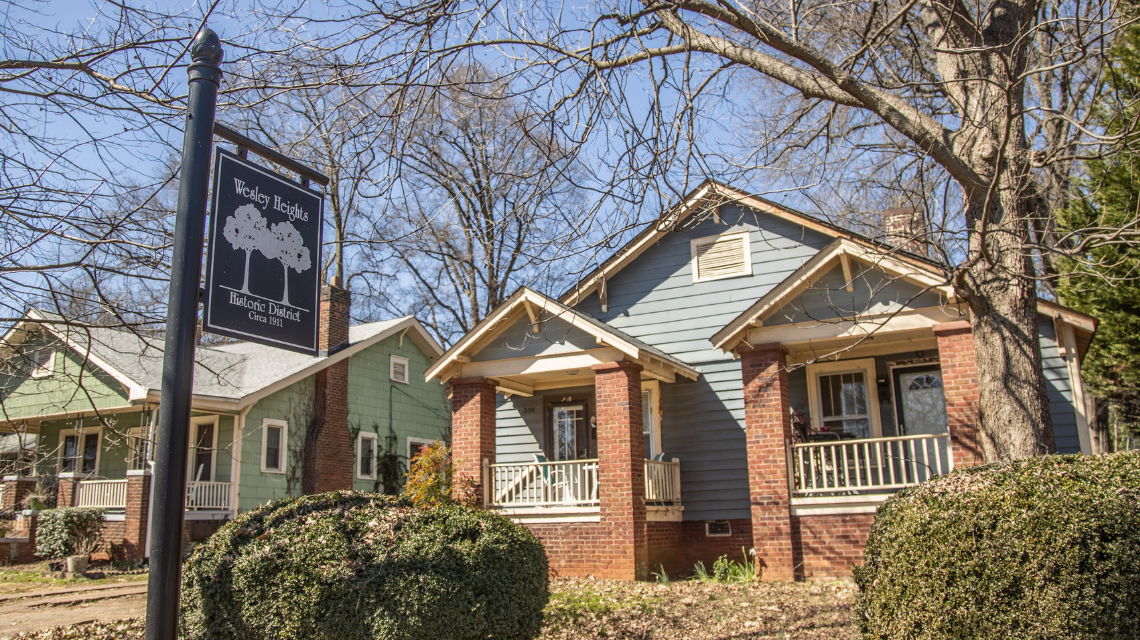
Start with housing stock. A 1925 bungalow in Dilworth that has been taken down to the studs sits three doors from one that has original wiring and a 40-year-old kitchen. Both are two-bed, one-and-a-half bath, roughly 1,400 square feet, built the same decade. The public record cannot tell them apart. A model working from that record will price them within a few thousand dollars of each other, and the market will price them $150,000 apart.
Then there is the lot. In Charlotte, backing to Providence Road, Rea Road, or a school parking lot is a real discount, and a wooded cul-de-sac lot or a golf frontage is a real premium. Neither shows up in a tax record. Neither does a creek that floods, a power easement across the back third, or the fact that your street is the one everybody uses to cut through to Ballantyne at 5 p.m.
New construction distorts the comps too. Union County and the Waxhaw and Indian Trail corridors have builder inventory closing constantly, often with rate buydowns and closing cost credits baked in. Those recorded sale prices look like clean comps to an algorithm. To an agent, they are prices with several thousand dollars of concessions hiding inside them. If your resale home sits near an active builder community, your estimate is being pulled toward numbers that were never really cash-to-seller. The same logic applies at the top of the market, which is why high-end Charlotte homes tend to be the least reliably estimated properties in the region.
Finally, models lag turning points. Regional days on market moved from 46 to 55 over the past year. A statistical model trained on closings is reading a market that already happened. It closes the gap eventually, but it does not see the shift while you are living through it.

Seven Signs Your Home Value Estimate Is Wrong
You do not need an appraisal license to spot a bad estimate. Most of them announce themselves. Here is what to check before you trust the number on your screen.
The home facts on file are wrong. Pull up your address on Zillow and Redfin and read the details. Wrong square footage, a missing bathroom, the wrong year built, or a lot size that does not match your survey means the model is valuing a house that does not exist.
You have made improvements that never hit public record. A kitchen renovation, a primary bath, refinished floors, a new roof, replaced HVAC, or a finished bonus room usually leaves no trace in tax data. If you have put real money into the house since you bought it, the estimate almost certainly does not reflect it.
The number moved sharply with no nearby sales to explain it. A $25,000 swing in a month, in a neighborhood where nothing closed, is the model rebalancing, not your home changing value.
Zillow and Redfin disagree by more than a few percent. Two models reading the same public data should land close together. When they do not, it usually means the data on your property is thin or contradictory.
The comps behind the number are not really comparable. Both sites show recent sales they used. Check them. If they include homes across a major road, in a different school assignment, in a different subdivision, or brand new construction versus your 1998 resale, the output is unreliable.
Your street sees very few sales. Algorithms are strongest in high-turnover subdivisions full of similar homes. In an established pocket where three houses sell a year, or on acreage, or on the water, there is not enough recent data to work with.
Your house is not typical for its area. Waterfront, acreage, a custom build, a historic home, a main-floor primary in a market of two-story colonials, an accessory dwelling, a pool, or an oversized lot all push you outside the pattern the model was built on.
If two or more of those apply, treat the estimate as a rough anchor and nothing more. That is not a knock on the tools. Zillow says plainly that the Zestimate is not an appraisal. The mistake is not using it. The mistake is pricing against it.
What Actually Determines Your Home's Value in Charlotte?
A real valuation is built from closed sales, then adjusted. The sales have to be genuinely comparable: similar size, similar age, similar style, in the same submarket, closed recently enough to reflect current conditions. In a fast-moving Charlotte neighborhood that might mean the last 90 days. In a slower pocket it might mean six months, with an adjustment for how the market moved in between.
Condition and finish level do most of the work after that. Kitchens and primary baths move price more than anything else a homeowner controls. Roof age, HVAC age, windows, and flooring move it too, mostly by removing objections rather than adding dollars. A buyer who walks into a home with a 22-year-old roof is not subtracting the cost of a roof. They are subtracting the cost of a roof plus the aggravation.
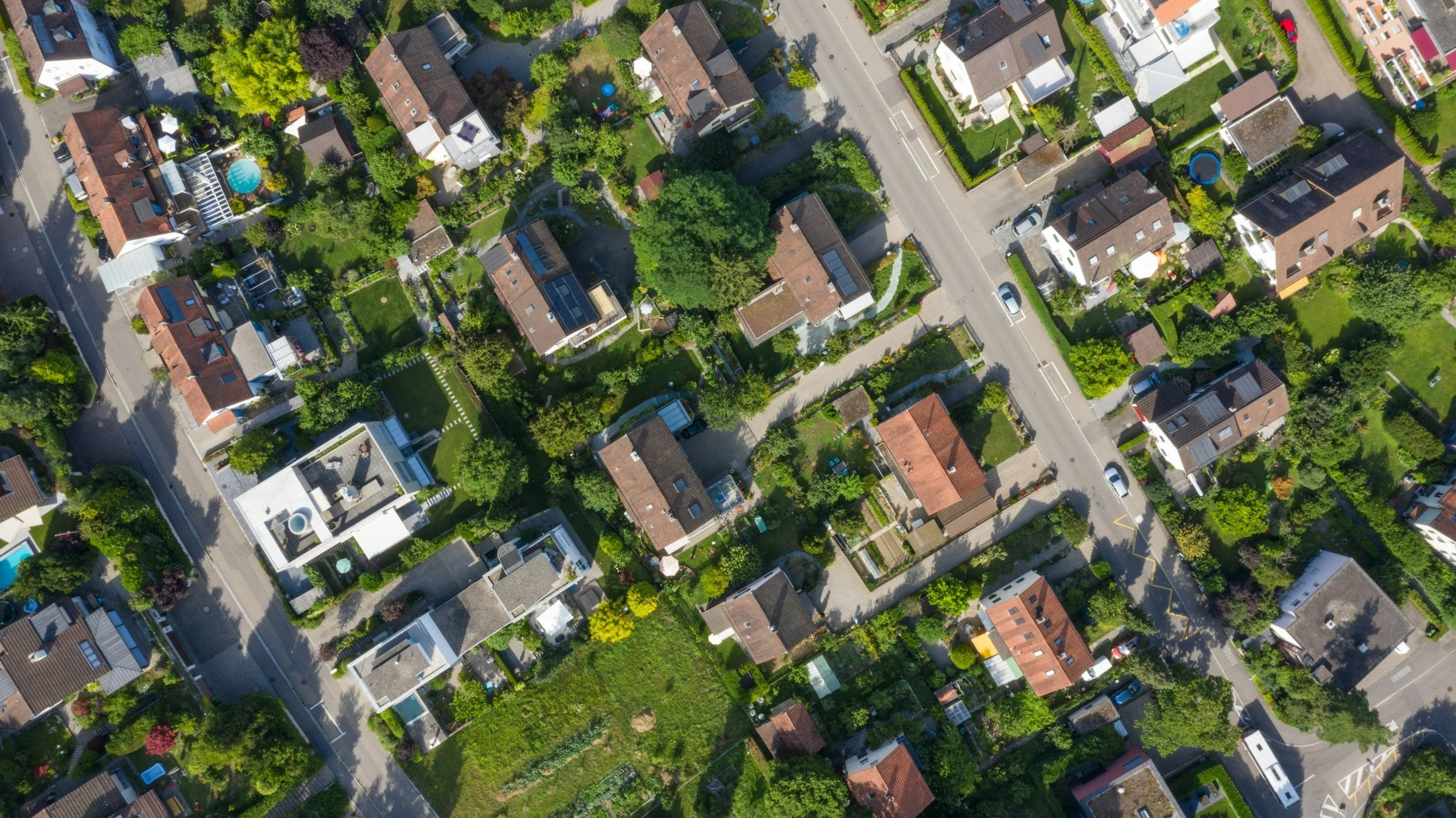
Location works at a scale the models cannot see. School assignment, which side of a busy road you sit on, whether your street connects to a greenway, whether you back to trees or to a retention pond, how close you are to the noise of a commercial corridor. Two identical floor plans a quarter mile apart in Ballantyne or Waxhaw can carry a meaningful spread for reasons no data feed captures.
Then there is the market you are actually selling into, not the one that closed last quarter. Your competition is the active and pending inventory around you right now. With Mecklenburg inventory up 13.1 percent year over year and supply at 3.6 months, buyers have real alternatives. Pricing to sold comps alone, while ignoring the four similar homes currently listed on your side of town, is one of the most common ways a good house ends up sitting. Our guide to how long it takes to sell a house in Charlotte walks through what those timelines look like in practice.

Online Estimate vs CMA vs Appraisal: Which Number Should You Use?
Three different numbers get called your home's value, and they are built for three different purposes. Using the wrong one for the wrong decision is where sellers get into trouble.
An automated estimate is a screening tool. A comparative market analysis, or CMA, is what you price from. An appraisal is what a lender relies on to protect its loan. A cash or instant offer is a fourth number entirely, and it is a speed decision rather than a value decision.
| VALUATION METHOD | WHO PRODUCES IT | WHAT IT COSTS | BEST USED FOR |
|---|---|---|---|
| Online estimate (AVM) | Zillow, Redfin, and bank sites, generated automatically from public and MLS data | Free | A rough starting point and tracking equity over time |
| Comparative market analysis (CMA) | A local listing agent, using Canopy MLS sold data plus a walk-through of your home | Free | Setting a list price, planning repairs, and building a net sheet |
| Appraisal | A licensed appraiser, usually ordered by the lender | Paid, typically a few hundred dollars | Financing and refinancing, estate settlement, divorce, tax appeal |
| Cash or instant offer | An investor or iBuyer making a direct purchase offer | Free to request | Comparing speed and certainty against an open-market sale |
A CMA is the one most sellers underuse. It is free, it comes from an agent with direct Canopy MLS access, and it is built after someone has actually walked your house and seen the things a data feed cannot. It should include the comps used, the adjustments made, what is currently competing with you, and a suggested pricing range with the reasoning behind each end of it.

How Do I Get an Accurate Value for My Charlotte Home?
Work through these in order. The first three take about twenty minutes and will get you far closer than the number you started with.
Claim your home and fix the facts. On both Zillow and Redfin, verify ownership and correct square footage, bed and bath counts, lot size, year built, and add renovations with dates and short descriptions. This is the single highest-return thing you can do to an online estimate.
Pull your own comps. Look for homes that sold in the last 90 days, within about a mile, in the same school assignment, within roughly 10 percent of your square footage, and of a similar age and style. Throw out anything that does not meet all five tests.
Look at active and pending listings, not just sold. Sold tells you where the market was. Active tells you what a buyer will be comparing you against next weekend.
Check the list-to-sale ratio in your specific pocket. The region averaged 96.0 percent of original list price in July 2026. Your neighborhood may run higher or lower, and that spread tells you how much pricing discipline your area demands.
Get a walk-through CMA. Ask for it in writing, with the comps attached. A pricing opinion given over the phone without seeing the house is a guess with better manners.
Ask for a seller net sheet. Value is not proceeds. Commission, concessions, payoff, taxes, and repairs all sit between the two, and the net number is the one that actually affects your next move.
That is the process The Finigan Group runs for Charlotte homeowners. Josh and Katie Finigan founded the team in 2016, and the group has closed more than 800 homes and over $280 million in volume since, with a 99.27 percent list-to-sale price ratio and an average of 17 days on market. RealTrends Verified ranked the team number one in Charlotte and number 13 in North Carolina for 2026. The free home value tool on this site is the fastest starting point, and it is followed by a walk-through, not by an automated number and a sales call. If you are still deciding who to work with, our guide to choosing the best listing agent in Charlotte lays out the questions worth asking.

What Your Number Means in Today's Charlotte Market
Getting the value right is step one. What you do with it is step two, and in a market where homes are averaging 55 days on market, the two decisions are connected.
Overpricing costs more than it used to. When supply was under two months, an aggressive list price got corrected by the market in a couple of weeks and the home still sold near value. At 3.6 months of supply, an overpriced listing burns through its best two weeks of buyer attention, takes a price reduction, and often ends up selling for less than it would have with an accurate price on day one. The 96.0 percent of original list price figure across the region is an average that includes homes that priced correctly and homes that had to chase the market down.
Underpricing has its own cost, and it is more common than people think in neighborhoods where an automated estimate ran low and nobody questioned it. If your estimate was $30,000 light because a renovated kitchen never made it into public record, and you priced against it, you gave away that $30,000 before the first showing.
Pricing strategy also depends on your goal. Some sellers want maximum price and can wait. Some need a date certain. Some want to test the market quietly first, which is where private and off-market listings in Charlotte come in. Others in the surrounding towns want an agent who works their specific submarket every week, whether that is Waxhaw or Weddington. Our full Charlotte home selling guide covers the rest of the preparation.
Charlotte Home Value FAQs
Short answers to the questions Charlotte homeowners ask most when they are trying to pin down a number.
What is the median home price in Charlotte right now?
Canopy MLS reported a median sales price of $410,000 across the Charlotte region in July 2026, up 1.1 percent from a year earlier. Mecklenburg County came in higher at $468,500, and the City of Charlotte at $430,000. Those are market-wide medians, not a value for any specific house.
How accurate is a Zestimate in Charlotte, NC?
Zillow publishes a nationwide median error rate of 1.83 percent for homes actively listed and 7.01 percent for off-market homes. If you have not listed yet, you are seeing the off-market number. On a $430,000 Charlotte home, a 7 percent miss is about $30,000 in either direction, and half of all estimates are off by more than the median.
Is the Redfin Estimate more accurate than the Zestimate?
The two are close. Redfin publishes 1.86 percent for on-market homes and 7.27 percent for off-market homes, against Zillow's 1.83 percent and 7.01 percent. The difference between them is smaller than the error range on any single property, so treat a gap between the two as a signal that the data on your home is thin, not as proof that one site is right.
Why is my home value estimate lower than my neighbor's?
Usually because the public record on one of the two houses is wrong or out of date. Square footage, bathroom counts, finished bonus rooms, and renovation permits all feed the model. A neighbor who claimed their home and updated the details will often show a higher number than an identical house that nobody has corrected.
Can I change my Zestimate or Redfin Estimate?
You cannot set the number, but you can improve the inputs. Claim your address on both sites, then correct square footage, bed and bath counts, lot size, year built, and add renovations with dates. The estimate recalculates. That fixes bad data, but it still cannot account for condition, finish level, or your lot.
How much does a home appraisal cost in Charlotte?
An appraisal is a paid service, usually a few hundred dollars, and it is ordered by a lender in most sales. A comparative market analysis from a listing agent is free, is based on the same Canopy MLS sold data, and is the number you use to set a list price.
What is my house worth if I need to sell it fast?
Speed and price are separate questions. A cash or instant offer will almost always come in below what an open-market sale produces, and the trade is certainty and timing. The right way to compare is to put both numbers side by side on a net sheet, after costs, and decide which outcome fits your timeline.
Don’t take our word for it
See what our clients say:
We’re Social! Lets Connect:
Table of Contents:
What is Your Home REALLY Worth?
Use our home value estimator to get a free, instant home-value estimate.
Enter your address
Is this the correct address?
Who should we send the report to?
We're pulling comps for your home right now. Let us know where to send your personalized analysis.
Where should we send your custom report?
We'll email a detailed CMA and comparable sales analysis.
You're all set, friend!
* This is a rough estimate of your home's value. We'll be in touch shortly to gather a few more details so we can provide a more in-depth and accurate equity evaluation in today's market.
Get a Real Number for Your Charlotte Home
Start with the home value tool on this page. It will give you an instant estimate, and it uses the same kind of data the national sites use, so treat it the same way: a starting point, not a list price.
Then have someone walk the house. A twenty-minute visit catches the things no model can price, the renovation with no permit on file, the lot premium, the layout that buyers in your neighborhood pay up for, the two repairs worth making before photos and the six that are not worth touching. You get a written range with the comps behind it, and no obligation to list.
Call or text (704) 200-9833, email info@thefinigangroup.com, or use the contact form below. The Finigan Group is at 3440 Toringdon Way, Suite 205, in Ballantyne, and works with sellers across Charlotte, Mecklenburg County, Union County, and the Lake Norman communities.
